Overview
A global healthcare organisation partnered with Arrotek to develop a catheter-based medical device intended for use in minimally invasive urological procedures. The device was designed to facilitate controlled access to the urinary tract and enable the delivery of therapeutic agents in conjunction with standard clinical accessories such as guidewires.
The programme required expertise in catheter engineering, design controls, risk management, verification and validation, sterile packaging, manufacturing development, and regulatory support. Acting as a strategic development partner, Arrotek provided end-to-end support from early feasibility and concept development through to commercialisation readiness.
The Challenge
The customer required an experienced development partner capable of managing the complete lifecycle of a catheter development programme.
The device consisted of a sterile, single-use catheter assembly incorporating a flexible shaft, precision-moulded connector, depth marking system, and sterile barrier packaging. The product needed to meet stringent performance, usability, manufacturability, and regulatory requirements while remaining compatible with established clinical workflows.
In addition to the technical development activities, the programme required a comprehensive design history package, risk management process, verification strategy, and manufacturing readiness plan to support future regulatory submission and market launch.
Our Approach
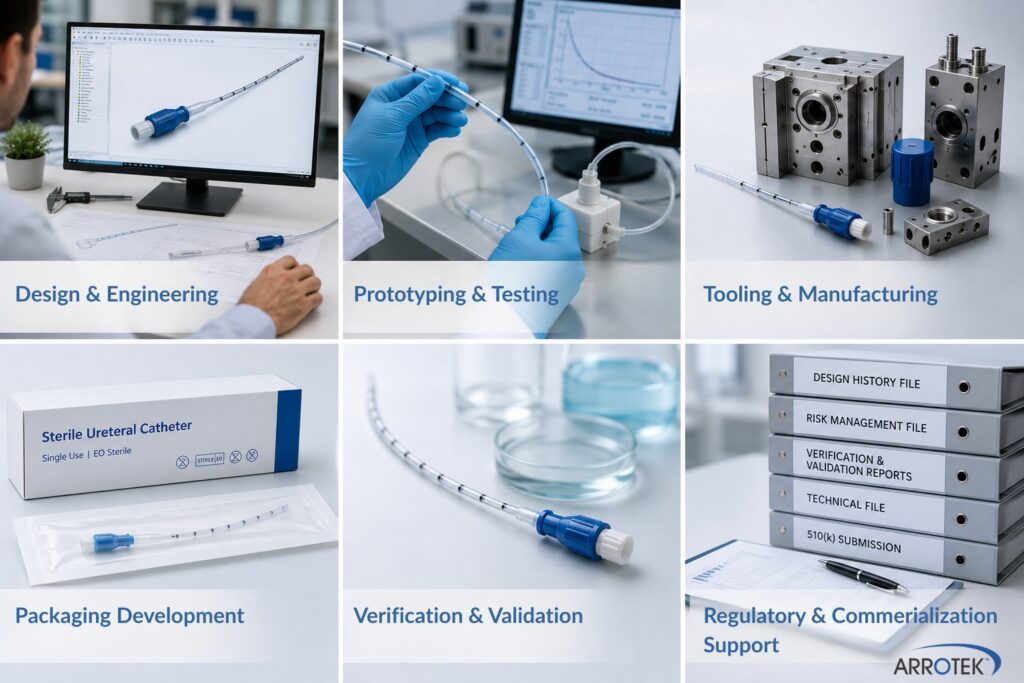
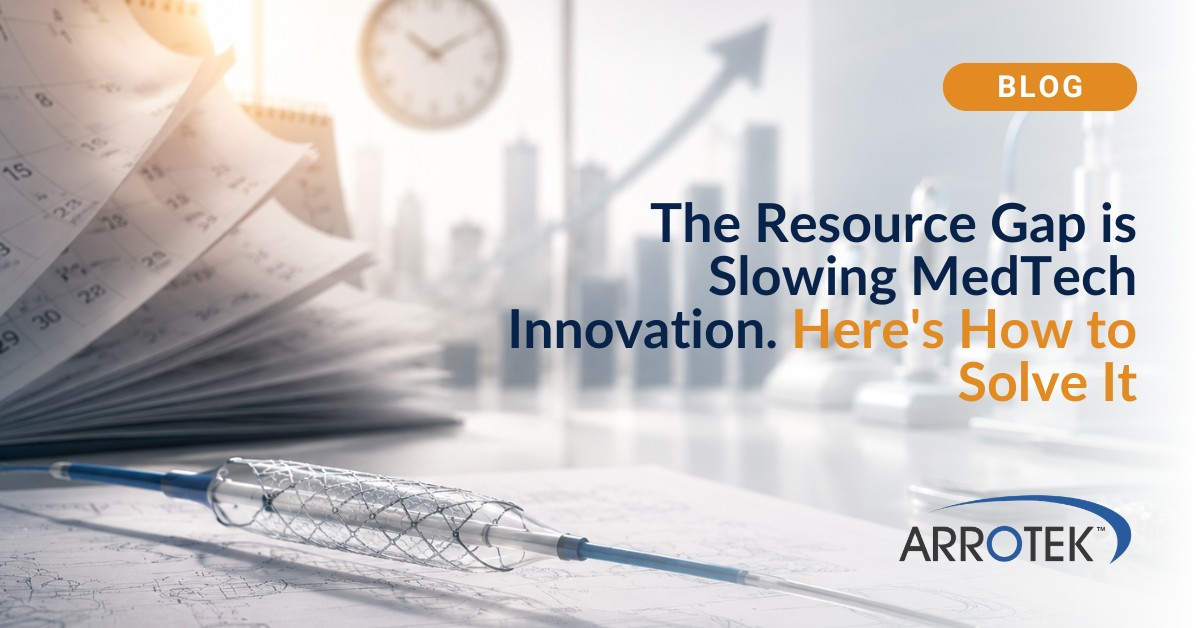
Images shown are representative only and are not photographs of the customer’s final product. Customer-specific imagery cannot be shared due to confidentiality agreements.
Technical Feasibility & Product Characterisation
The project began with a comprehensive feasibility and characterisation phase to establish the technical foundation for development.
Arrotek’s engineering team:
- Evaluated materials and component technologies.
- Established critical performance requirements and technical specifications.
- Conducted functional assessments and gap analyses.
- Supported hazard identification and risk management activities.
- Contributed to the development of detailed design input requirements.
This phase provided the data necessary to guide design decisions and establish measurable product requirements.
Catheter Design & Engineering Development
Working within a structured design control framework, Arrotek developed the catheter architecture and associated product specifications.
Activities included:
- Catheter shaft specification development.
- Hub and connector design.
- 3D CAD modelling and engineering drawings.
- Material selection and specification development.
- Prototype design and manufacture.
- Assembly definition and manufacturing process development.
- Packaging and labelling design.
Rapid prototyping enabled iterative evaluation and refinement throughout the design process, ensuring the final design met both functional and manufacturing requirements.
Design Controls & Risk Management
Arrotek integrated risk management throughout the development lifecycle to ensure compliance with medical device regulatory expectations.
Support included:
- Design risk assessments.
- Process risk analyses.
- Hazard identification activities.
- Critical-to-quality characteristic definition.
- Verification planning support.
- Design review facilitation.
This structured approach reduced development risk while maintaining traceability between requirements, design outputs, and verification activities.
Manufacturing & Tooling Development
To support future commercial production, Arrotek developed manufacturing-ready solutions and production processes.
This included:
- Tooling design and procurement.
- Manufacturing process development.
- Assembly process definition.
- Packaging process development.
- Inspection and release testing strategy development.
- Engineering sample manufacture.
By considering manufacturability from the outset, the project progressed efficiently toward verification and commercialisation readiness.
Verification & Validation
Arrotek planned and executed a comprehensive verification and validation programme to demonstrate compliance with product requirements and regulatory expectations.
Activities included:
- Functional performance testing.
- Packaging verification.
- Distribution testing.
- Shelf-life studies.
- Biocompatibility assessments.
- Sterilisation validation.
- Verification report generation.
The resulting evidence package supported both regulatory submissions and product commercialisation activities.
Regulatory & Commercialisation Support
Throughout the programme, Arrotek worked closely with the customer to support regulatory strategy and launch preparation.
Support included:
- Regulatory submission documentation.
- Technical file development.
- Design traceability support.
- Manufacturing transfer planning.
- Supply chain development.
- Quality and compliance support.
This ensured a smooth transition from development into commercial manufacturing and market launch preparation.
Results
Arrotek successfully delivered:
- A complete catheter design and development programme.
- Comprehensive design control documentation.
- Catheter component and assembly specifications.
- Engineering prototypes and manufacturing-ready designs.
- Sterile packaging and labelling solutions.
- Verification and validation evidence packages.
- Regulatory submission support documentation.
- Manufacturing and supply chain readiness plans.
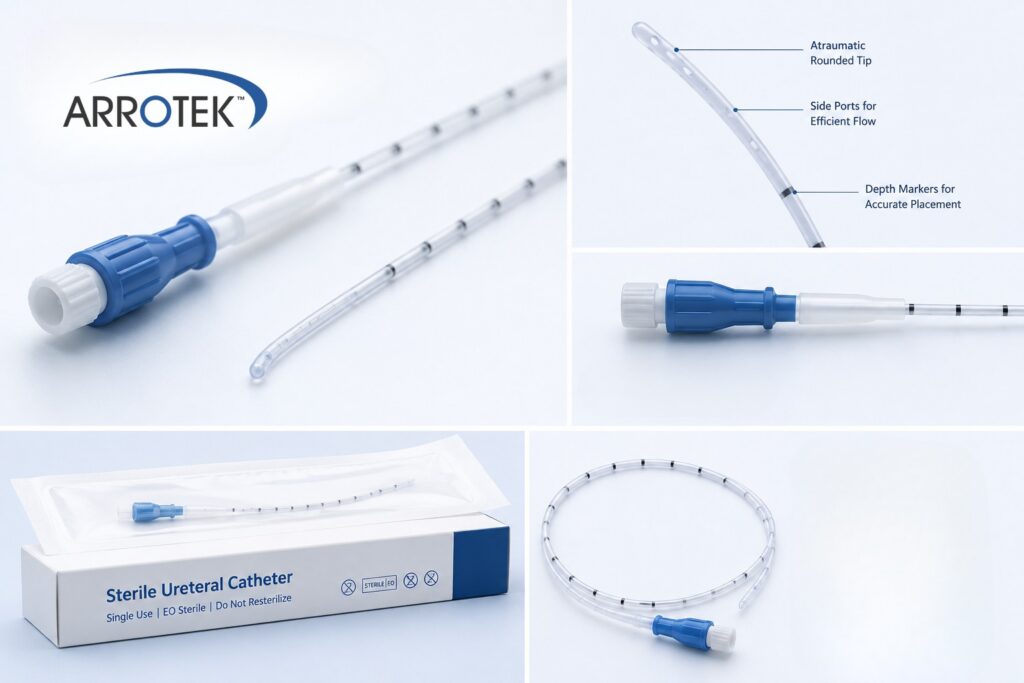
Images shown are representative only and are not photographs of the customer’s final product. Customer-specific imagery cannot be shared due to confidentiality agreements.
Arrotek’s Catheter Development Expertise
This project demonstrates Arrotek’s ability to provide end-to-end support for catheter-based medical devices, including:
- Catheter design and engineering.
- Material selection and characterisation.
- Prototype development and testing.
- Design controls and risk management.
- Verification and validation.
- Sterile packaging development.
- Sterilisation validation.
- Regulatory submission support.
- Manufacturing process development.
- Commercialisation readiness.
Conclusion
Developing catheter-based medical devices requires a combination of engineering expertise, regulatory knowledge, manufacturing capability, and quality systems experience.
By providing support across every stage of the development lifecycle, Arrotek helped accelerate programme progress while reducing technical and regulatory risk.
From catheter concept development and prototyping through verification, validation, regulatory support, and manufacturing transfer, Arrotek provides a complete development pathway for catheter-based medical devices.